
Is Paytm Really Banned in India? 7 Truths Every User Must Know
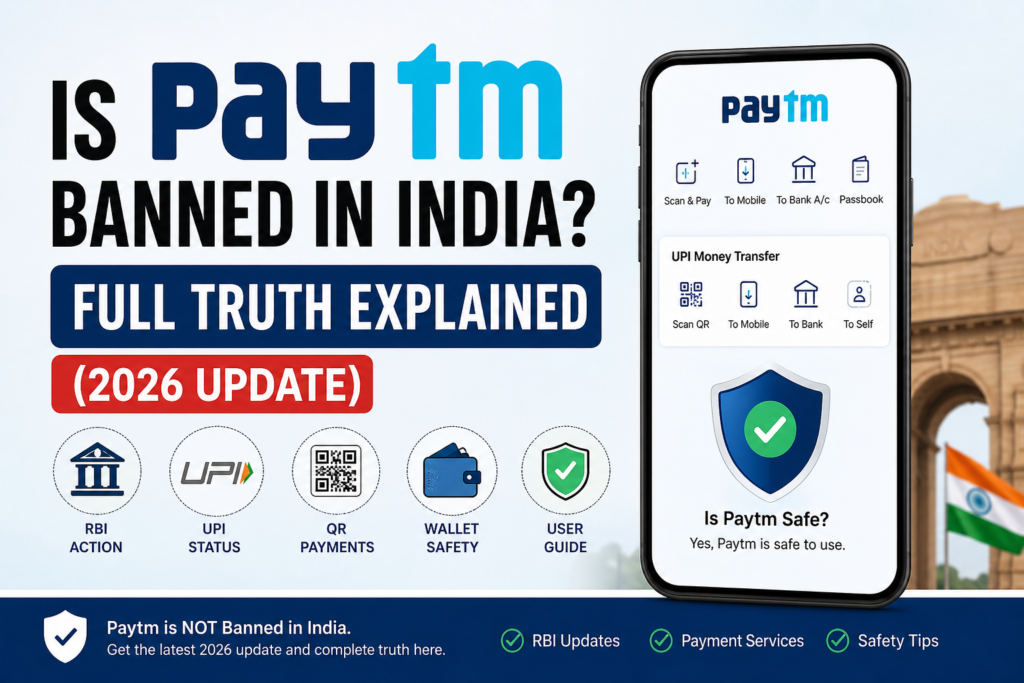
Table of Contents
- Introduction
- Is Paytm Really Banned in India? If you are wondering if Paytm is banned in India, here are the facts you need to know.
- Why Did People Panic?
- What Happened to Paytm Payments Bank?
- 7 Truths Every User Must Know
- Is Paytm UPI and QR Still Working?
- Is Your Money Safe?
- 5 Smart Things Users Should Do Now
- Frequently Asked Questions
- Conclusion- Final Verdict
Introduction
Many people in India are still asking one important question in 2026: Is Paytm really banned in India?
After the action involving Paytm Payments Bank, confusion spread rapidly. Headlines, social media posts, and rumors led users to believe the entire Paytm platform had stopped working.
That created panic for millions of users.
But the real story is different.
If you use Paytm for UPI, QR code payments, recharges, or business payments, this guide explains everything clearly.
Is Paytm Really Banned in India?
No, Paytm is not fully banned in India.
This is the truth that many people missed. The issue mainly involved Paytm Payments Bank, not the complete Paytm platform. That means many everyday payment services continued working.
Why Did People Panic?
Most people saw news about action from the Reserve Bank of India. When users hear a regulator has taken strict action, they often assume the whole company has been shut down.
That is exactly where the confusion started. In reality, the concern was focused mainly on the banking entity.
What Happened to Paytm Payments Bank?
Paytm Payments Bank was built to offer digital-first banking services such as:
- Deposits within limits
- Wallet support
- Money transfers
- Mobile banking
- UPI-linked convenience features
It was different from a traditional bank. Regulatory concerns reportedly included compliance processes and internal controls.
Truths Every User Must Know
1. Paytm App Still Works
The Paytm app itself did not disappear.
2. UPI Payments Continued
Many users continued making UPI transfers.
3. QR Code Payments Continued
Many shops still accept Paytm QR payments.
4. Merchants Could Still Receive Payments
Business owners continued collecting payments in many cases.
5. The Banking Arm Faced Restrictions
The main issue involved the payments bank unit.
6. User Money Concerns Were Overstated
Many fears online were exaggerated.
7. Rumors Spread Faster Than Facts
This became one of the biggest reasons for confusion.
Is Paytm UPI and QR Still Working?
For many users, yes. Paytm also works with banking partners, which helped many services continue.
Users often reported:
- UPI transfers are working
- QR scans are working
- Merchant payments working
- Bill payments available
- Recharge services active
UPI information can also be checked via the National Payments Corporation of India.
Is Your Money Safe?
This was one of the biggest worries. If you are concerned about balances or account status:
- Check directly in the app
- Use official support
- Review recent transactions
- Avoid fake WhatsApp forwards
- Follow official announcements
Always verify information before reacting.
Smart Things Users Should Do Now
1. Keep Your Linked Bank Active
Ensure your UPI account is active.
2. Update the App
Use the latest version of Paytm.
3. Review Wallet Balances
Keep funds organized.
4. Ignore Panic Rumors
Many viral messages are misleading.
5. Keep Backup Payment Apps Ready
Apps like PhonePe or Google Pay may also help, depending on your preference.
Frequently Asked Questions
Is Paytm fully banned in India?
No. The complete Paytm platform is not fully banned.
Can I still use Paytm UPI?
Many users continued using UPI services.
Is Paytm QR still working?
Many merchant QR systems continued functioning.
Should I stop using Paytm?
That depends on your needs. Many users continued normally.
Conclusion
So, is Paytm really banned in India?No. The biggest truth is that confusion around Paytm Payments Bank made many users believe the full Paytm platform was shut down.
For many people, UPI, QR payments, and normal usage continued with limited disruption. The lesson is simple: verify facts, ignore rumors, and use digital payments wisely.