
TABLE OF CONTENTS
- Introduction: Joy in the now
- An Appreciation of Living in the Present.
- Savouring: One of the keys to everyday happiness.
- Ways of being in the now
- Benefits of Living in the Present
- Overcoming Common Challenges
- Conclusion: Embrace the Power of Now
Introduction: Joy in the Now.
In this busy world, one can easily be consumed by worry about the future or regret over the past. Nevertheless, positive psychology points out an obvious, though strong reality: that true happiness lives here and now. The idea of savouring helps to savor life and enjoy it as it goes. When we also learn to live in the present, we not only live but also exist.
An Appreciation of Living in the Present.
Being present is the ability to be conscious of what you are doing, not to judge. It is being aware of what you think, feel, and what is around without becoming engrossed in it. Most of the individuals are on autopilot; they get through the activities doing it without actually enjoying them. This detachment can result in stress, anxiety, and dissatisfaction.
Life becomes slow when you start to concentrate on the moment you are living in. You see into some minor details, become more transported, and act on situations.
Savouring: One of the keys to everyday happiness.
Savouring is a central concept in positive psychology, which is the skill to increase and extend positive experiences. It is not related to extraordinary moments but to their understanding on a deeper level. Whether you are savouring a hot meal, the laugh of your child, or the morning air, savouring enables you to get more pleasure in your day-to-day.
Ways of being in the now
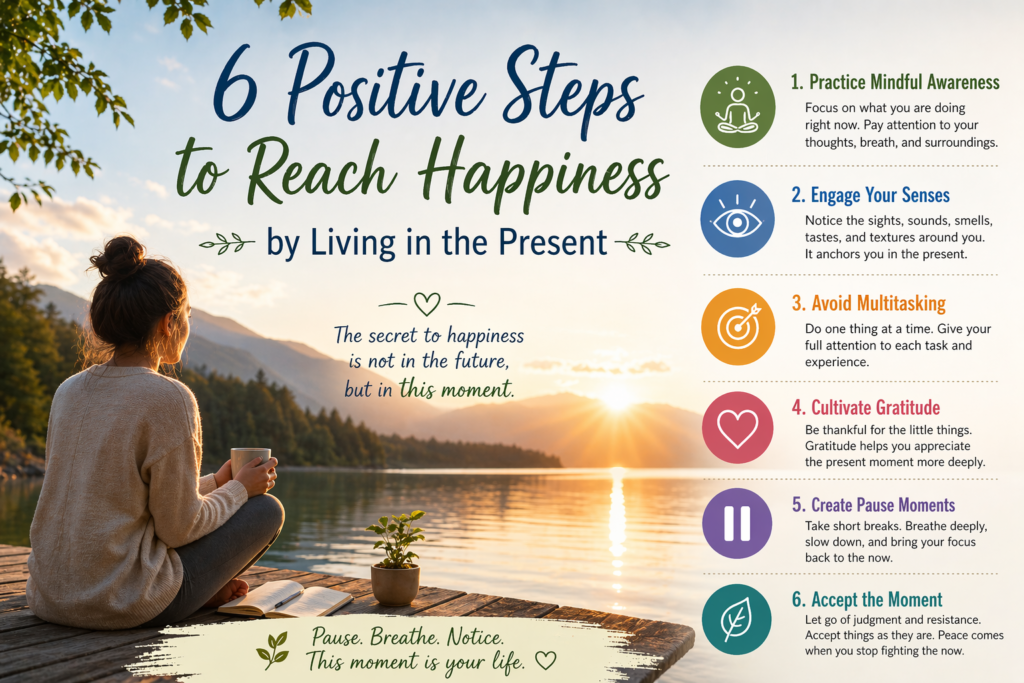
1. Practice Mindful Awareness
Present-moment living is based on mindfulness. It is consciously listening to what is going on in the present moment. Simple practices can get you started, such as focusing on your breath or looking at what is around you. An example is provided on how to drink tea, feel its warmth, smell it, and taste it. This practice builds up the skill of being present and decreases overthinking.
2. Use Your Senses to the Fullest.
The sense is an influential device to make you present. When you actively involve them, you will have a more fulfilling and profound experience.
Try noticing:
-The colors that surround you.
-The noises of your surroundings.
-The sense of textures.
These tiny details will help to put aside your concerns and bring you to the present moment, making life full of happiness and even more alive.
3. Give up on Multitasking
It might appear that multitasking is effective, but it can significantly decrease the quality of your work and experience. Fragmented attention means that you are not engaging the richness of life in every moment.
Rather, concentrate on single activities. This not only enhances efficiency but also boosts satisfaction and calmness.
4. Cultivate a routine of Gratitude
One of the easiest but most effective methods of being present is gratitude. In doing so, by realizing the goodness in your life at this very moment, your mind instead switches off worries.
Find time daily to be thankful for three things. They do not need to be large-scale; little things can be the most enjoyable. Gratitude and savouring work in collaboration to make you feel content.
5. Create Pause Moments
You don’t need long hours of meditation to live in the present. Small pauses throughout your day can make a significant difference.
Pause to:
- Take a few deep breaths
- Notice your surroundings
- Check in with your emotions
- think about moments that brought you happiness
These brief moments help reset your mind and bring your attention back to the present, even on busy days.
6. Accept the Moment as It Is
One of the biggest barriers to living in the present is constant judgment. We often evaluate experiences as good or bad, right or wrong. This habit creates resistance and prevents us from fully experiencing life.
Instead, practice acceptance. Allow the moment to be as it is, without trying to change it immediately. This does not mean giving up—it means creating space for calm awareness. Acceptance reduces stress and allows you to respond thoughtfully.
Benefits of Living in the Present
When you practice happiness and present-moment awareness regularly, you begin to notice meaningful changes in your life:
- Reduced anxiety and overthinking
- Improved emotional balance
- Stronger relationships
- Greater appreciation for simple moments
- A deeper sense of peace and fulfillment
Life no longer feels rushed or overwhelming. Instead, it becomes a series of meaningful moments.
Overcoming Common Challenges
Staying present is not always easy. The mind naturally drifts, especially during stressful times. However, the goal is not to eliminate distractions but to gently return to the present whenever you notice your mind wandering.
If you find yourself overthinking, focus on your breath or engage your senses. If distractions arise, acknowledge them without judgment and bring your attention back. With practice, this process becomes easier and more natural.
Conclusion: Embrace the Power of Now
Living in the present is a powerful life skill that can deeply transform the way you think, feel, and experience the world. Many people spend their time worrying about the future or thinking about the past, which often takes away peace and joy from the present moment. When you learn the practice of savouring, you begin to slow down and truly notice life as it unfolds.
Happiness does not always have to be something you search for in the future. In fact, it already exists in small, everyday moments that are often overlooked. It can be found in a smile, a deep breath, the sound of nature, or a moment of gratitude. When you focus on the present, you realize that joy is not distant—it is already here.